Seeing What is Possible, at the North America Symposium
Going into the Amgen Scholars North America Symposium, Ellie Gardner and Savanna Tippe were expecting an academic-style research conference. While the event delivered on that promise, it also delivered much more than either Scholar expected: a rich opportunity to learn from and directly interact with bioscientists across academia and industry.
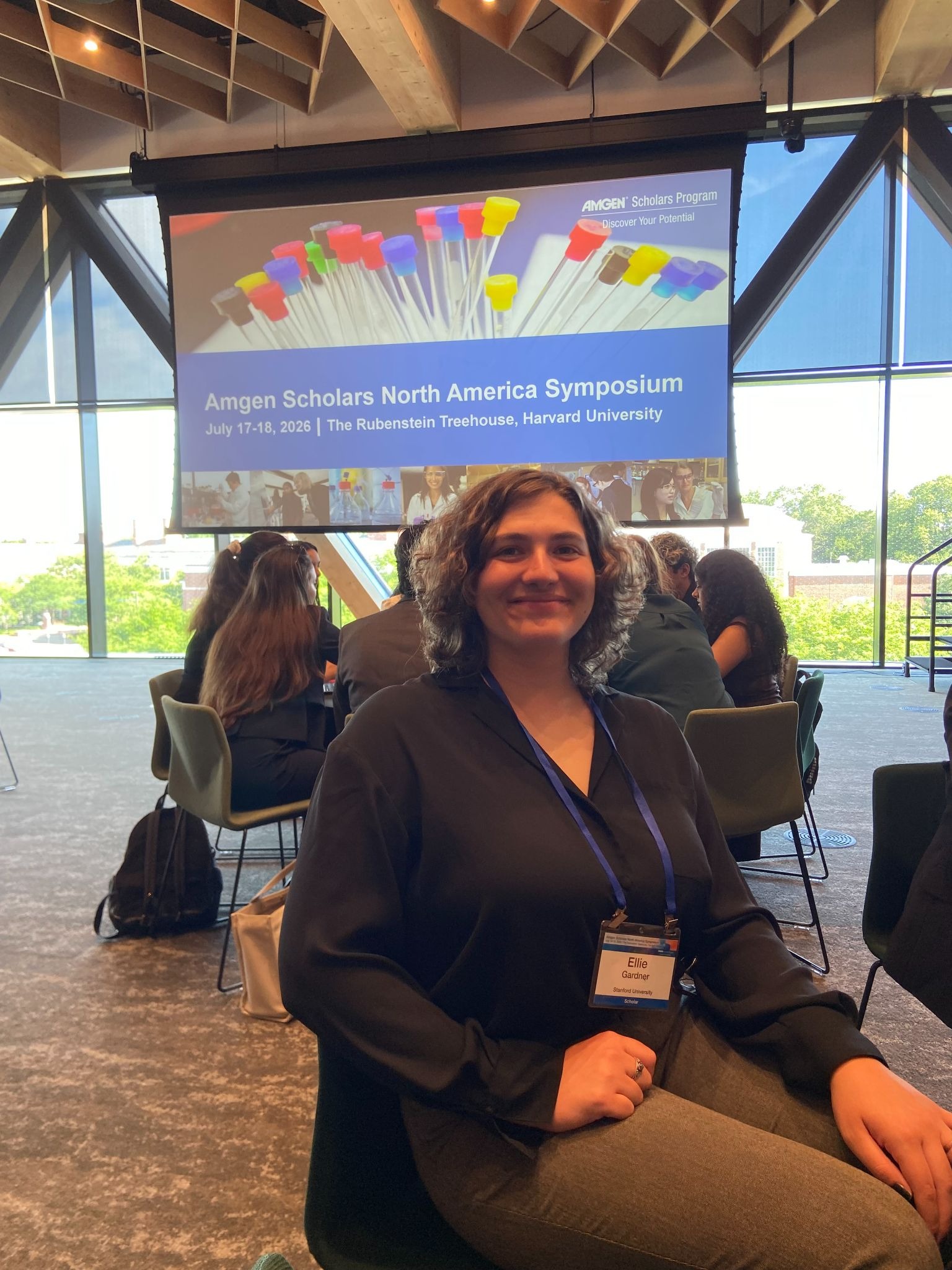
“I didn’t know that there was going to be one or more scientists for every four of us where we could talk to each other for a long time,” says Gardner (pictured at left/above), a 2026 Amgen Scholar at Stanford University. “It was reassuring to see how many people who are more advanced in their careers — scientists from all sorts of different fields and sectors — were willing to invest in us and our goals.”
Indeed, says Tippe, a 2026 Amgen Scholar at the University of Toronto: “I was pleasantly surprised by how the Symposium emphasized professional growth and provided the opportunity to learn about industry career paths. The depth of the mentorship and the openness of the industry professionals far exceeded my expectations, making it a very impactful, authentic and a personal experience.”
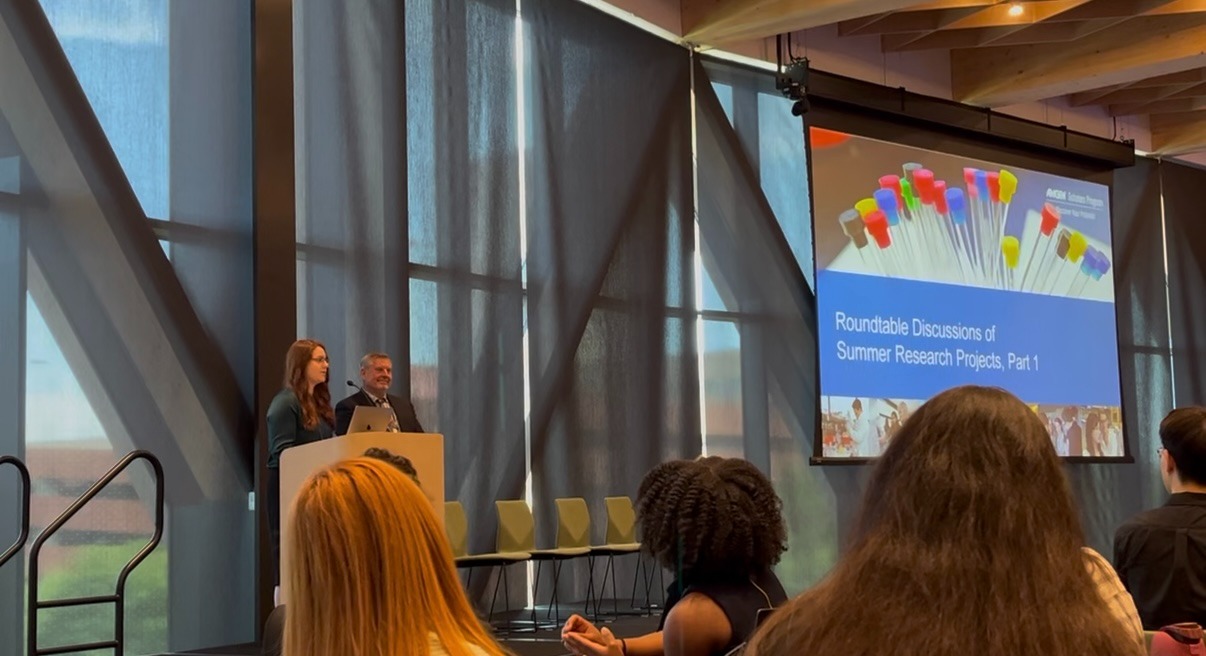
Held in Boston this year, the North America Symposium brought together the 2026 Amgen Scholars from 15 host institutions in the United States and Canada. In addition to keynote and plenary speakers, the event featured alumni Scholars who returned to share about their research, career pathways, and experiences with grad school, as well as some 40 Amgen employees from the local Cambridge facility who volunteered to share their career experiences.
Meeting local biotechnology professionals was a highlight for Tippe, who appreciated the chance to hear directly from the Amgen volunteers who were working across a variety of roles and career stages. Tippe, who studies pharmacology at the University of Alberta, especially enjoyed connecting with a volunteer who is a veterinary pathologist. “Their career journey, which included experience at several large pharmaceutical companies as well as a startup, resonated strongly with me,” Tippe says. “As someone who aspires to build a career in large pharma and eventually pursuing entrepreneurial opportunities, I found their perspective especially insightful. They spoke about how their experience in larger organizations provided the knowledge, skills, and networks that proved invaluable in a startup environment, while also reflecting on the rewards of returning to a leadership role within a larger company.”
For Gardner, connecting with an Amgen Scholar alumni who is now a postdoctoral fellow working in her area of interests was particularly insightful. Gardner’s research this summer was with organoids made from spleen cells from donors — using them to create a human-derived system to test vaccines. The postdoc she met at a Symposium roundtable was also focused on antiviral immunity and vaccines. “It was fun to discuss with someone who was in my field with my very specific research interests what they are doing now that they have continued their research journey beyond Amgen Scholars,” she says.
Gardner, who is a rising senior at the University of Alabama and is working on an accelerated master’s degree, wants to continue antiviral immunity research as a grad student. And she hopes to do so, she says, at a research institution like Stanford. “Its really interesting to see the kind of techniques that they’re using with a more dedicated space and more dedicated funding for different tools and facilities, compared to my home institution.” After the Amgen Scholars symposium, she realizes now that there is a lot more flexibility than she previously thought to be able to customize a career path that can straddle academia and industry.
Similarly, while the Symposium did not fundamentally change Tippe’s long-term aspirations, it strengthened her confidence in them. She also wants to pursue a PhD, with a goal toward ultimately founding her own startup. “The Symposium provided valuable insight into what my future journey can realistically look like,” she says. “The experience challenged me to think more broadly about the impact of biomedical research and reinforced my enthusiasm for pursuing a career in the field.”
Aside from exchanging ideas with peers, program alumni, and professionals, Tippe and Gardner also loved being in Boston. It was their first time exploring the city. “What stood out to me most was the city’s strong culture of innovation and discovery,” Tippe says. “Being surrounded by world-renowned research institutions, biotechnology companies, and a community deeply invested in advancing science made the connection between academic research and real world impact feel especially tangible.”
Gardner loved seeing how the campuses of both Boston University and Harvard University integrated so well into the city. That allowed her and her cohort to spot the beloved local bunnies hopping about the campuses’ grassy areas, as well as to take an evening stroll to the historic Mike’s Pastry. Overall, Gardner says, the Symposium was “a great opportunity to grow as a scientist and experience a type of environment that I wouldn’t be able to otherwise.”