Ten Weeks in St. Louis: Cementing Bonds for Scientific Pursuits
Ten weeks in St. Louis may seem like an opening for the latest rom-com on Netflix, but for some students it was just the right set up to create lasting relationships and new opportunities in science and beyond. Out of a cohort of 16 in 2023, at least five Amgen Scholars at Washington University in St. Louis (WashU) have returned there for their PhDs, a testament to the strong bonds created over the summer program — bonds to each other, to lab advisors and mentors, and to a scientific pathway. While Kristen Barwick, Lexie Matte, Joshua Wydra, and Veronica Foureaux-Lee are each pursuing different areas of research, their interests and relationships have led them all back to the same place.
Where interests and friendships converge
A native of Missouri, Kristen Barwick was drawn to WashU for a PhD because of its orthopedic and musculoskeletal research programs. “It’s truly one of the top places to do this type of research in the country,” she says. “But another factor was just how great of a time I had during that Amgen Scholars Program.”
Barwick had arrived at WashU as an Amgen Scholar just before her senior year as an undergraduate at University of Missouri-Columbia (Mizzou). After doing lab work for three summers in plant science, she knew she wanted to make the jump to biomedical sciences and decided to take that leap through the WashU Amgen Scholars Program.
Her work in the lab of Matthew Silva opened her eyes to the field of orthopedics. “In retrospect, I had always had an interest in this field due to my dad’s job in radiology, but never really explored that avenue in research,” she says. Now as a PhD student working on approaches for cartilage regeneration during osteoarthritis, Barwick is eyeing twin interests of academic research and science communications.
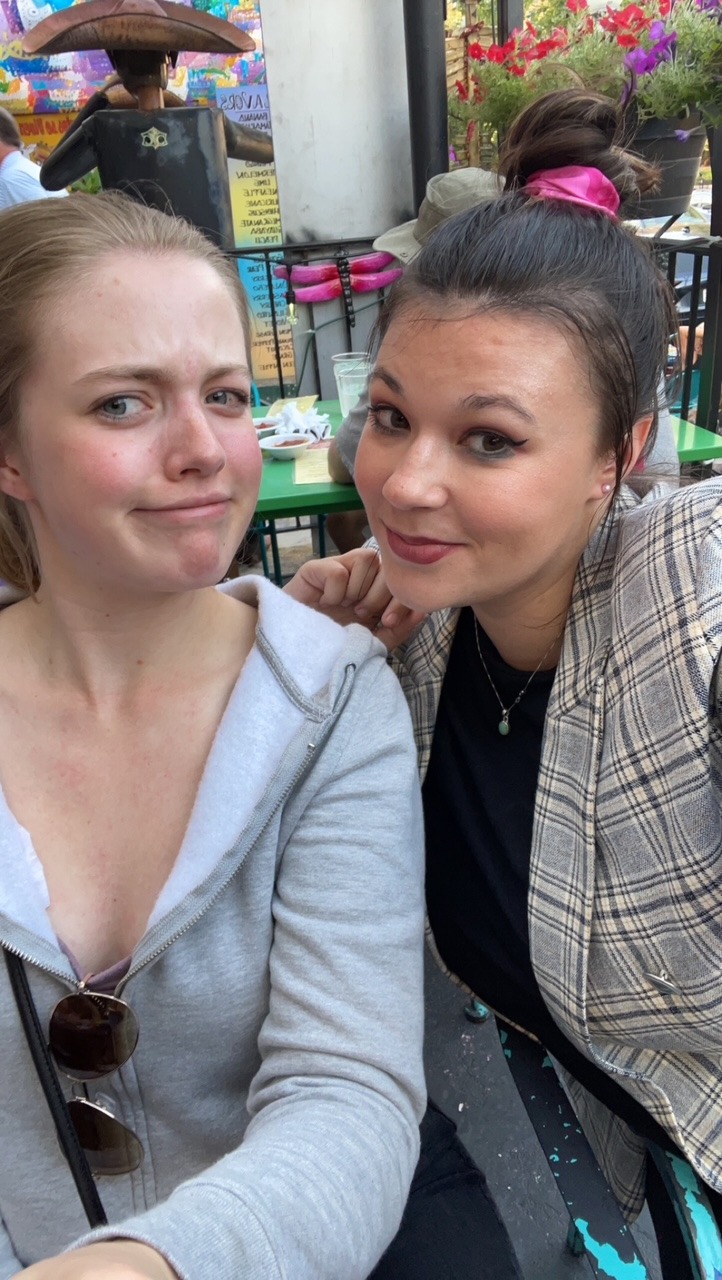
Beyond the scientific opportunities her time WashU as an Amgen Scholar has opened, Barwick treasures the experience for introducing her to her best friend, Lexie Matte (pictured above; Matte on left and Barwick on right). “We shared a dorm and literally the first time we met, we just clicked and have been inseparable ever since,” she says. “That friendship lasted through her living in Wisconsin and me in Missouri after that summer until we both entered WashU as PhD students.” Barwick even stood as a bridesmaid when Matte got married in the fall of 2025.
Those friendships played a big role in the decision of many in the 2023 cohort to return to WashU for their PhDs. “I knew that by going to WashU for my PhD, I would be trained at a certain caliber of scientific research, collaboration, and translational applications,” Matte says. “But I also believe that the people that my cohort and I met during our time as Amgen Scholars really helped us all cement our decisions.”
At WashU now as a graduate student, Matte is studying the gut microbiome and how the colonic tissue environment works to prevent microbial infection. Her WashU Amgen Scholars experience while an undergraduate student at St. Norbert College exposed her to what life as a graduate student would be like and fueled her interests in pursuing a PhD. Matte hopes to get a fellowship in clinical microbiology after her PhD and to ultimately work as a clinical microbiology lab director at a larger academic hospital. “I would love to use my knowledge and training to benefit patient care,” she says.
A community of scholarship
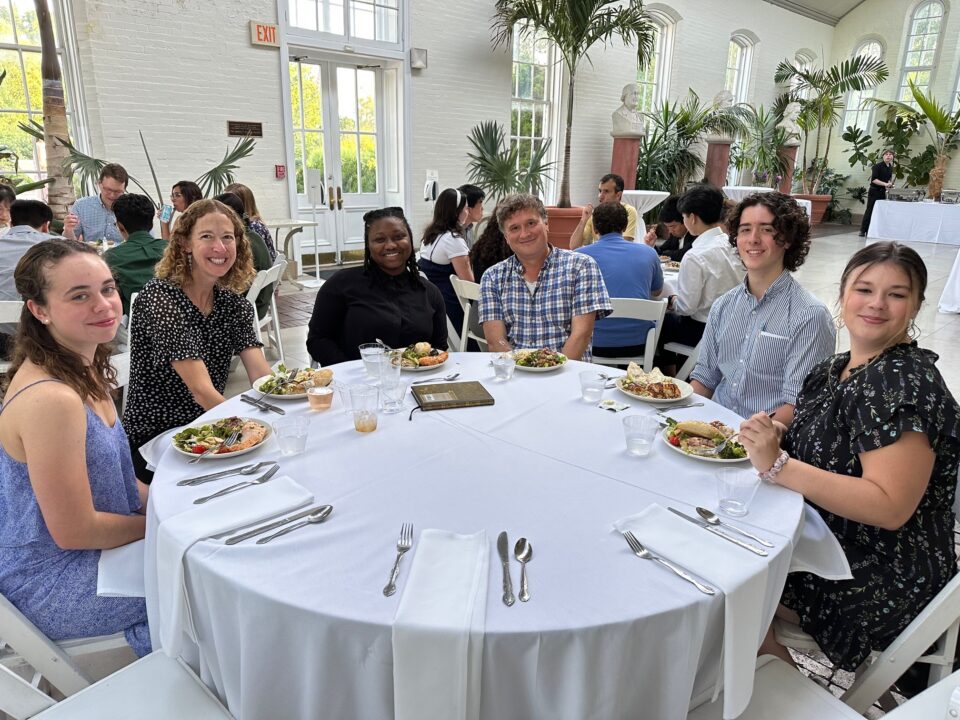
Like for Matte, Amgen Scholars also opened the door to research for Joshua Wydra. Prior to attending Truman State University in Kirksville, Missouri, he had few opportunities for science-related learning. Then, while at Truman looking for undergraduate research experiences, he heard about Amgen Scholars from a senior who had done the program the year prior, and he decided to apply.
“Amgen Scholars definitely changed my trajectory,” Wydra says. “Before the program, I was unsure if research or graduate school was the right path for me. Without this experience, there is no guarantee that I would be where I am today.”
Wydra says that he decided to return to WashU for his PhD because of the rapport he had built with his research advisor, Tom Brett, during Amgen Scholars. He is now working on structural and functional studies of the cell receptor TREM2 and its relation to disease prevalence in diseases like asthma and Alzheimer’s disease.
“I am blessed that I got the opportunity to both attend Amgen Scholars as well as get accepted into graduate school at WashU,” he says. “I think many other people from my cohort that decided to return had similar reasons. A lot of us loved a lot about our time at WashU: the collaborative nature of research here, program administrators and faculty like Julianne Mason and Joe Jez, and the opportunity to perform high-impact research here in the Midwest.”
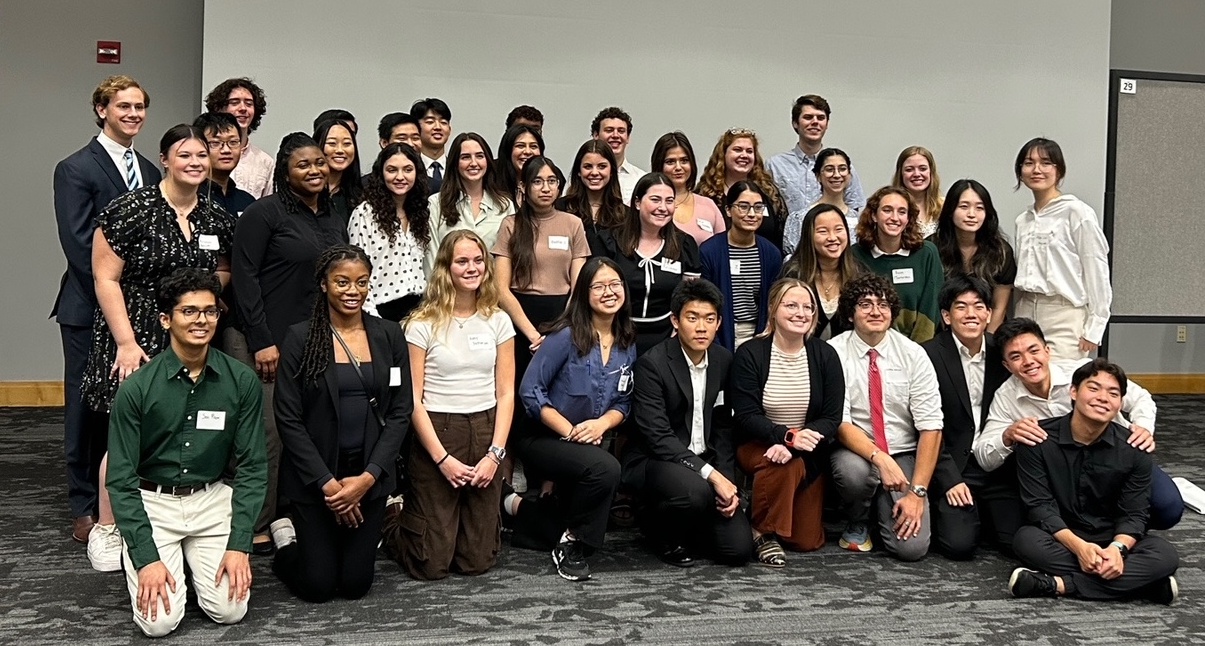
Indeed, says Amgen Scholar Veronica Foureaux-Lee: “I felt that virtually everyone I encountered at WashU — student, faculty, or staff — genuinely wanted to see me succeed and would personally do what they could to support my pursuits.” That feeling of welcoming and belonging was especially important to Foureaux-Lee whose Amgen Scholars research was in a new field for her.
An undergraduate student at WashU in cognitive neuroscience, Foureaux-Lee worked for the summer in a lab that produces and studies specialized pancreatic endocrine cells derived from human pluripotent stem cells. “Getting to start the differentiation process with my own little samples of stem cells was a highlight of my experience,” she says. “Although it is a long process, and I didn’t get to see it through to the end, I still remember the excitement I felt getting to check on my cells’ development every day. Getting to see this delicate, microscopic process with my own eyes — and even ask my own research questions about it — was an incredible honor.”
Foureaux-Lee is now working on a PhD in educational psychology and is a recent recipient of an NSF GRFP award. She wants to understand how educators can best support students in “learning to learn” — a skillset, she says, that has “always been essential to academic success but grows in importance by the day as the learning tools available to students continue to expand.”
The varied experiences of Foureaux-Lee, Barwick, Matte, and Wydra that led them all to pursue PhDs at WashU are a testament, they say, to the community of both Amgen Scholars and WashU. “At WashU, rigorous academics coexist with a thriving culture of collaboration and community,” Foureaux-Lee says. “As an undergrad, there is a lot more scaffolding around you, but as a graduate student, you come in knowing that you have to seek it out, so it is crucial to feel that you will be surrounded by others who also want to develop community.”